Where to apply for fully funded PhD assistantships in the USA? Discover 7 powerful PhD assistantships covering tuition, stipend, and living costs.
Introduction
Pursuing a PhD in the United States is a dream for thousands of students worldwide. The USA is home to some of the world’s best research universities, cutting-edge laboratories, and globally recognized faculty. However, one major challenge stands in the way—cost. Tuition fees, living expenses, housing, health insurance, and research costs can easily discourage even the most talented students.
This leads to one important question:
Where to apply for fully funded PhD assistantships in the USA?
The good news is that fully funded PhD assistantships are not rare in the USA. In fact, most reputable U.S. universities expect PhD students to be fully funded through assistantships, fellowships, and institutional funding. These funding opportunities cover tuition fees, provide monthly stipends, offer health insurance, and often include additional research support.
In this comprehensive guide, you will discover 7 powerful fully funded PhD assistantship options in the USA, where to apply, how they work, and how you can maximize your chances of securing one.
What Is a Fully Funded PhD Assistantship?
A fully funded PhD assistantship is a financial support package offered by universities that allows doctoral students to study without paying tuition or worrying about living costs.
What It Usually Covers
- Full tuition waiver
- Monthly stipend
- Health insurance
- Research or teaching experience
- Conference and research funding (in many cases)
In return, students typically assist with teaching, research, or academic services, gaining valuable professional experience alongside their studies.
Why the USA Is the Best Country for Fully Funded PhDs
The USA stands out globally for doctoral education due to:
- Strong research funding
- Institutional commitment to PhD students
- Wide availability of assistantships
- Career-oriented doctoral training
- Global recognition of U.S. PhD degrees
Most PhD programs in the USA do not expect students to self-fund, especially in STEM, social sciences, and humanities.
Where to Apply for 7 Powerful Fully Funded PhD Assistantships in the USA
Below are the most reliable and respected funding pathways for PhD students.
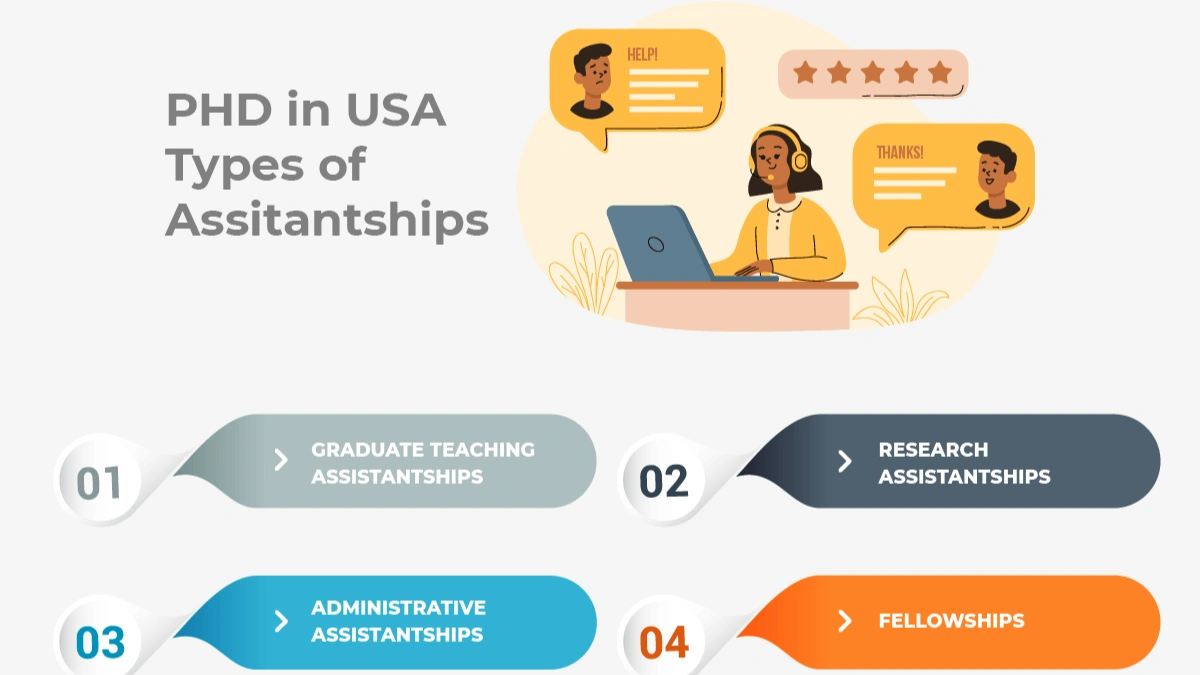
1. Teaching Assistantships (TA)
Teaching Assistantships are among the most common funding options for PhD students.
What They Cover
- Full tuition waiver
- Monthly stipend
- Health insurance
- Teaching experience
Your Responsibilities
- Assisting professors
- Teaching undergraduate classes
- Grading assignments
- Holding office hours
Who Should Apply
- Students with strong communication skills
- Applicants interested in academic careers
Teaching Assistantships are ideal for students who enjoy mentoring and classroom engagement.
2. Research Assistantships (RA)
Research Assistantships provide funding through faculty research projects.
What They Cover
- Tuition fees
- Monthly stipend
- Health insurance
- Research funding
Your Responsibilities
- Conducting research
- Data analysis
- Lab work
- Publishing academic papers
Who Should Apply
- Students with strong research backgrounds
- STEM and applied science candidates
RA positions are often better paid than TAs and offer direct research exposure.
3. University-Funded PhD Fellowships
Many universities offer internal fellowships specifically for PhD students.
What They Cover
- Full tuition
- Competitive stipend
- No teaching obligation (in some cases)
- Research grants
Why They Are Powerful
These fellowships allow students to focus entirely on research during the early years of their PhD.
4. Departmental PhD Assistantships
Departments often manage their own funding pools.
What They Cover
- Tuition waiver
- Monthly stipend
- Academic employment
Where to Apply
- Directly through the department’s PhD application
These assistantships are often awarded automatically to strong applicants.
5. Government-Supported PhD Assistantships
Some PhD assistantships are funded by government research initiatives.
What They Cover
- Tuition
- Living stipend
- Research expenses
- Professional development
These assistantships are common in science, engineering, policy, and public health fields.
6. Industry-Sponsored PhD Assistantships
Certain PhD students receive funding through partnerships with private organizations.
What They Cover
- Tuition fees
- Stipend
- Industry research exposure
Why They Matter
They offer practical experience and strong job prospects after graduation.
7. Diversity and International PhD Assistantships
Many universities offer special funding to support diversity and global inclusion.
What They Cover
- Full tuition
- Living stipend
- Mentorship support
These assistantships promote equity and inclusion in higher education.
How to Apply for Fully Funded PhD Assistantships in the USA
Step 1: Identify Your Research Interests
Clear research goals improve funding chances.
Step 2: Shortlist Universities
Focus on universities known for strong PhD funding.
Step 3: Contact Faculty (Optional but Helpful)
Email professors whose research aligns with yours.
Step 4: Prepare Strong Application Materials
- Statement of Purpose
- Research proposal
- CV
- Recommendation letters
Step 5: Apply Early
Early applicants often receive priority funding.
Key Documents That Strengthen Funding Chances
- Strong academic transcripts
- Clear research alignment
- Prior publications or research projects
- Teaching or lab experience
Common Myths About Fully Funded PhDs in the USA
Myth 1: Only Top-Ranked Students Get Funding
Reality: Fit and motivation matter as much as grades.
Myth 2: Funding Is Only for STEM
Reality: Humanities and social sciences are also funded.
Myth 3: International Students Are Less Likely to Get Funding
Reality: Many assistantships are open to all nationalities.
Living as a Fully Funded PhD Student in the USA
Funded PhD students typically enjoy:
- Stable monthly income
- Health insurance
- Academic networking
- Professional development
While not luxurious, the stipend is usually sufficient for a comfortable student life.
Career Opportunities After a Fully Funded PhD
Graduates pursue careers in:
- Academia
- Research institutions
- Industry
- Policy organizations
- Entrepreneurship
A U.S. PhD opens global career doors.
Conclusion
So, where should you apply for 7 powerful fully funded PhD assistantships in the USA?
The answer lies in teaching assistantships, research assistantships, fellowships, departmental funding, government support, industry collaboration, and diversity-focused programs.
The USA remains one of the few countries where fully funded PhD education is the norm rather than the exception. With strong preparation, research focus, and timely applications, you can secure a PhD assistantship that covers tuition, living costs, and professional growth.
Your academic journey does not have to be limited by finances—fully funded PhD assistantships make it possible.
Also Read: How Can Students Study in Canada Without IELTS Through Scholarships 2025?
Sources
FAQs
1. Are PhD assistantships fully funded in the USA?
Yes, most PhD assistantships include tuition waiver and stipend.
2. Can international students apply for PhD assistantships?
Yes, international students are eligible for many assistantships.
3. Do assistantships cover living expenses?
Yes, stipends are designed to cover basic living costs.
4. Is GRE mandatory for funded PhD programs?
Not always; many programs have waived GRE requirements.
5. How competitive are PhD assistantships?
They are competitive but achievable with strong preparation.
6. Can I work outside my assistantship?
Typically limited due to visa and workload restrictions.
7. When should I start applying?
At least 12 months before your intended start date.