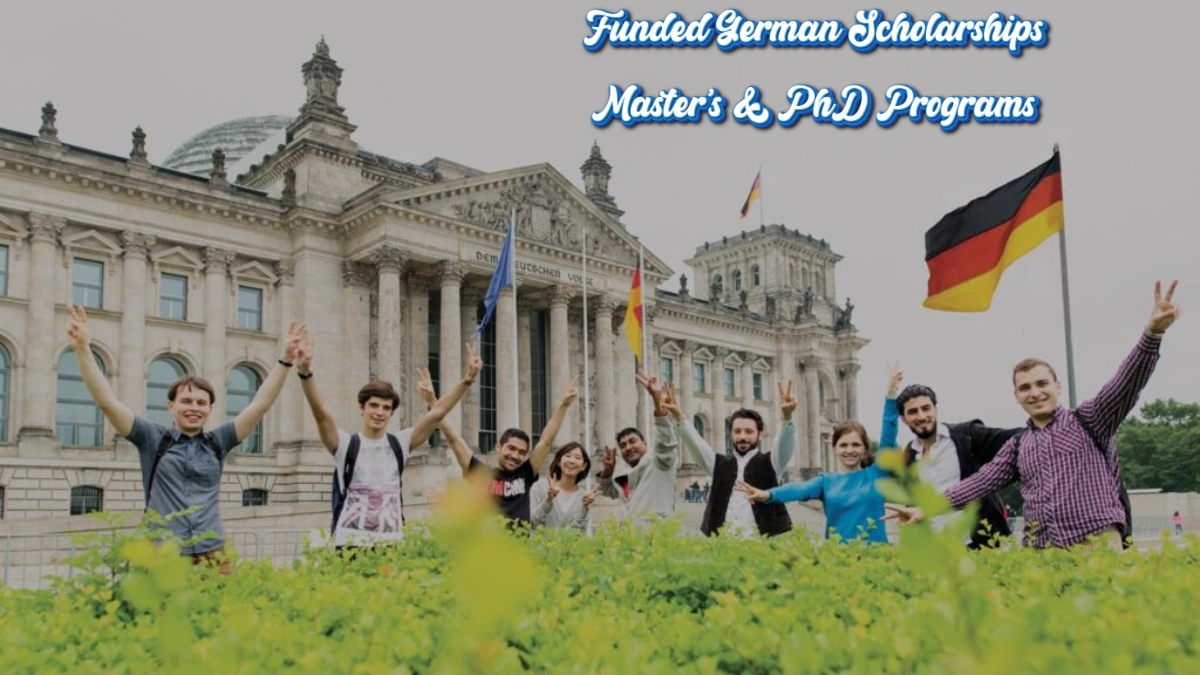
Fully funded German scholarships — discover DAAD, EPOS, Foundation and other scholarship opportunities for Master’s and PhD students from around the world. Learn what’s covered, eligibility criteria, and how to apply.
Find top fully funded master’s and PhD scholarships for international students in Germany.
Introduction
Studying abroad is a dream for many students — but the cost often stands in the way. Fortunately, Germany offers generous fully funded scholarships that allow international students to pursue Master’s or PhD programs without the financial burden. With strong backing from government bodies and foundations, these scholarships cover tuition, living costs, travel, and more. For students from India and other countries, such schemes provide a life-changing opportunity to gain world-class education, exposure, and international credentials. This article explores some of the major fully funded German scholarships available, what they offer, who can apply, and how to maximize your chances.
Why Germany: Education & Affordability
- Many public universities in Germany have low or no tuition fees, especially compared to many other Western countries.
- Combine that with generous living grants, travel allowances, and other support — and a fully funded scholarship can mean virtually free education plus a stipend.
- Germany also boasts a wide variety of academic programs: from engineering and natural sciences to humanities, social sciences, arts, and interdisciplinary studies.
Given these, Germany remains one of the most attractive destinations for international students seeking high-quality, affordable, and globally recognized higher education.
Major Fully Funded Scholarships for International Students
Here are some of the top scholarship schemes for Master’s and PhD students:
DAAD (German Academic Exchange Service) Scholarships
- This is perhaps the most well-known funding body for international students wanting to study in Germany.
- DAAD scholarships cover many academic fields — from engineering and natural sciences to humanities, social sciences, arts, economics, health sciences, and more.
- For Master’s: DAAD’s “Master Studies for All Academic Disciplines” scholarship offers a monthly stipend (≈ €934), health insurance, travel allowance, and sometimes rent subsidy & family support.
- For PhD / Doctoral candidates: There are DAAD scholarships for structured doctoral programmes or individually supervised PhD research. Funding can last up to four years.
What’s covered (typically):
- Tuition or semester fees (often minimal or none in public universities)
- Monthly stipend (for living costs) — e.g., ~€934/month for Master’s, ~€1,300/month for PhD
- Health insurance, liability insurance, accident insurance
- Travel allowance (one-time, for flight travel)
- Additional support: sometimes rent subsidy, family allowances if applicable
Heinrich Böll Foundation Scholarships
- This foundation offers scholarships to international students (including non-German citizens) at Master’s and PhD levels.
- Focus areas often include social sciences, environmental studies, democracy, human rights, sustainability, etc.
- Benefits usually include tuition waiver (or support), monthly stipend, health insurance, maybe housing or travel — effectively full funding for eligible candidates.
Friedrich Ebert Stiftung Scholarships
- Open to students across many academic fields and at different degree levels, including Master’s and doctoral studies.
- Offers full funding: tuition coverage, monthly allowance, sometimes German language courses included (if needed)
Konrad Adenauer Stiftung Scholarships
- Grants for Master and PhD students, especially those with interest in social/political engagement, leadership, social sciences, and related fields.
- Benefits commonly include living cost allowances, tuition or fee support, and other standard support elements.
Other DAAD‑Affiliated Funding Schemes & Specialized Grants
DAAD — and affiliated German funding bodies — run several specialized scholarship/grant programmes, including:
- Structured doctoral programmes (“Graduate School Scholarship Programme — GSSP”) for PhD aspirants.
- Bi‑nationally supervised doctoral degrees / “cotutelle” arrangements — for those who combine home-institution supervision and a German supervisor under DAAD grant.
- Research grants / scholarships for specific fields (e.g. aeronautics, space, engineering) — for doctoral or postdoc students.
- Scholarships for students in arts, music, architecture, design, fine arts, film, etc. for graduate or postgraduate studies under DAAD.
Who Is Eligible — Key Criteria
Eligibility criteria vary by scholarship, but some common patterns:
What Does “Fully Funded” Actually Mean — Coverage & Benefits
Being “fully funded” in these scholarships typically means:
| Expense / Need | Covered by Scholarship (Yes/Usually) |
|---|---|
| Tuition fees / semester fees | Yes — public universities often low/no tuition; scholarship covers semester contributions or fee waivers. |
| Monthly living stipend (food, transport, basic expenses) | Yes — for Master’s and PhD (e.g. ~€934/month for Master’s, ~€1,300/month for PhD) |
| Health insurance / liability / accident insurance | Yes — included in many scholarships. |
| Travel allowance (flight from home country to Germany, and return) | Generally yes (once), depending on scholarship and origin country. |
| One-time study allowance / setup costs | Often yes (varies by scholarship). |
| Rent subsidy / support for family members (if applicable) | Possible — under certain conditions and scholarships. |
This broad coverage significantly reduces — or even eliminates — financial hurdles for international students.
Common Application Process — Step by Step
While details vary between scholarships and universities, here is a typical general process:
- Choose your desired study program and university in Germany. First apply for admission to the program (unless you’re applying for a structured PhD/research programme).
- Check scholarship eligibility and deadlines. Review requirements such as previous education, work experience (if needed), language proficiency, etc.
- Prepare required documents: application form, CV/resume (often in Europass format), motivation letter, letters of recommendation, academic transcripts and degrees, language certificates (if required), and sometimes evidence of work experience.
- Submit application to university (and scholarship application where required). For many DAAD scholarships, you apply via the university programme; if selected, you’ll be invited to apply via DAAD portal.
- Selection and award. Scholarship committees (or DAAD/foundation) evaluate and award scholarships based on academic merit, motivation, alignment with scholarship goals, recommendation letters, etc.
It’s important to plan ahead — application windows vary, and competition is high.
Pros & Cons — What to Keep in Mind
✅ Advantages
- Zero or minimal tuition costs — many public universities in Germany charge little or no tuition, especially for international students.
- Comprehensive funding — not just tuition, but living stipend, health insurance, travel allowance, possibly accommodation or rent subsidy.
- Wide range of study fields — from STEM to humanities to arts, social sciences, and more.
- Prestigious credentials — German education is internationally recognized; having a German Master’s/PhD can boost your global career prospects.
- Cultural and international exposure — living & studying in Germany offers exposure to a multicultural academic environment, networking opportunities, research labs, etc.
⚠️ Challenges & Limitations
- High competition — many applicants from around the world; scholarship slots are limited.
- Eligibility criteria — some scholarships require work experience (especially development‑related courses), good grades, language proficiency (German or English), etc.
- Language barrier — some courses may be in German. Even if in English, living in Germany often benefits from some German language knowledge.
- Paperwork & preparation — you need to gather many documents: transcripts, recommendation letters, motivation letter, sometimes employer letters, language certificates.
- Adjustment & adaptation — moving to a new country, handling cultural differences, climate, living expenses (beyond stipend), and academic expectations.
Realistic Chances for Indian / International Students
From available data:
- DAAD Funded German Scholarships are open to students from India and a number of other developing or emerging economies.
- The breadth of academic fields covered means many students — whether from engineering, humanities, natural sciences, social sciences, or arts — may find suitable programs.
- For students with strong academic records, clear motivation, and required language skills, fully Funded German Scholarships are a realistic goal — though competition remains stiff.
If you apply carefully and tailor your application (motivation letter, recommendation letters, program choice) to the scholarship criteria — you have a good shot.
Tips to Improve Your Chances
- Start early — many deadlines vary by university/program; begin research at least 6–12 months in advance.
- Choose relevant programs — pick courses that match your background and interests and are recognized under scholarship schemes (especially for specialized Funded German Scholarships like EPOS or foundation‑based ones).
- Demonstrate motivation and clarity — a well-written, focused motivation letter explaining why you chose the program, how it ties to your past, and how you plan to use it post‑study helps a lot.
- Secure strong recommendation letters — from professors or employers (especially for development‑ or work‑experience–based Funded German Scholarships).
- Ensure language requirements — check whether course is in German or English; if German, ensure you meet required level (or commit to learning).
- Apply to multiple programs (if allowed) — gives flexibility and improves chances if first choice doesn’t work out.
- Keep documentation ready — transcripts, degree certificates, work experience proofs, language certificates.
Also Read: How Can Students Apply for (RTP) Research Training Program Scholarships 2025?
Sources
- DAAD
- Heinrich-Böll-Stiftung+1
- standyou.com+1
- enmindz.com+2MS in Germany+2
- Great Learning+2Scholarshiphive+2
- Study Overseas Consultants+2Oyi.net+2
FAQs
Q1. Are there fully funded scholarships in Germany for international students doing Master’s or PhD?
Yes — several programmes (notably under DAAD, as well as some foundations) offer fully funded scholarships for Master’s and PhD students from abroad.
Q2. What costs are covered under a “fully funded” scholarship in Germany?
Typically: tuition or semester fees (often negligible at public universities), monthly stipend for living costs, health insurance, travel allowance (to/from Germany), possibly rent subsidies or support for accompanying family members.
Q3. Which Funded German Scholarships should I consider applying to?
Major options include DAAD Funded German Scholarships (for general Master’s and PhD), Funded German Scholarships by foundations like Heinrich Böll Foundation, Friedrich Ebert Stiftung, Konrad Adenauer Stiftung, and some specialized DAAD-funded grants (e.g. for research, doctoral programmes, social‑science or arts courses).
Q4. Do I need work experience to apply?
For many general Master’s/PhD Funded German Scholarships, no — fresh graduates are eligible.
However, for some programmes (especially development‑oriented ones under DAAD or other grant courses), minimum work experience (e.g. 2 years) may be required.
Q5. Are courses in English available, or do I need to know German?
Yes — many international Master’s and PhD programs in Germany are offered in English. For such courses, you typically need an English proficiency certificate (such as TOEFL or IELTS).
If you choose a course taught in German, then German language knowledge is required (DSH / TestDaF or equivalent).
Q6. How competitive is the selection?
Very competitive — many thousands of applicants from around the world vie for limited scholarship slots. Strong academics, motivation, clear goals, and good documentation significantly improve chances.
Yes — there are fully funded German scholarships available for Master’s and PhD students from around the world, including India. With organizations like DAAD and several foundations offering tuition waivers, stipends, health coverage, and travel allowance, it’s possible to study in Germany with minimal or no personal cost. However, applicants must be prepared with strong academic records, proper documentation, and well-crafted applications. For students willing to put in the effort, doing a Funded German Scholarships Master’s or PhD in Germany can be an excellent, life-changing opportunity.
If you like — I can prepare a list of 10–15 active fully funded German scholarships for the coming 12–18 months (with deadlines, eligibility, and quick checklist).
Would you like me to build that list for you now?